
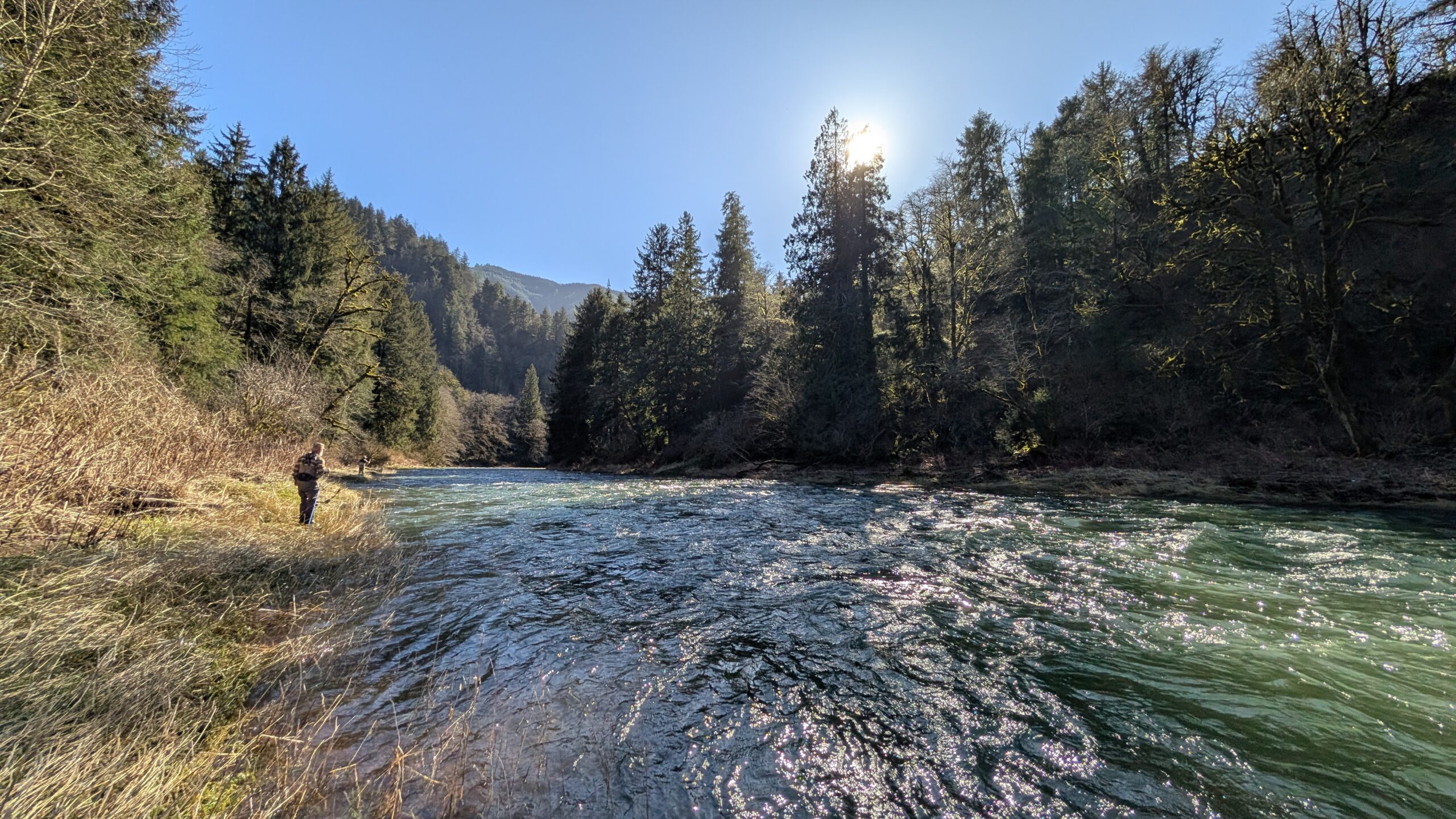


The winter steelhead season is upon us, following a great summer season. As we transition, it’s crucial to understand how to adjust our approach, as winter fish behave differently. This guide is designed to help you maximize your time on the water by detailing the habits of winter steelhead, their likely holding spots, and the best ways to target them.
While summer and winter steelhead share a common name, their in-river behavior is quite different. The main distinction is the time they spend in the watershed before spawning. Winter fish often enter a river system and spawn within days or weeks. During the winter months, varying water levels and cold temperatures significantly influence their movement. They may travel very little to intercept a fly, making it vital to get your fly into the “zone” as quickly as possible and maintain that depth and pace throughout the swing.

Here are five key factors to help increase your success:
1 – Casting angle
It’s important to understand the depth of your fly and how it’s effected by the angle you cast and any mend you may make. A cast that’s constantly being mended is not fishing and will not get the necessary depth. During the winter months, when the speed and depth of your fly is critically important, casting at a 70-80 degree angle and mending your line at the beginning of the swing is important to gaining depth and slowing the fly down,
2 – Moving through the run
How fast you move and when play a big role in the success you will have. Winter fish will not move as far to intercept your fly. They’re generally sitting deeper in the water column in bigger and colder water. The pace I move through the run is dictated by water clarity and temperature. If you have low visibility you need to slow down the pace you work the run. That being said it is important that you still step down either during the swing or before your next cast. I’m a big believer that it’s possible to bore Steelhead by not moving down the run. When you move is a great tool as well. If you can safely do so, there are times when you need to slow down the speed of your swing by implementing a cast, step, swing cadence versus the normal cast, swing, step process. The cast, step, swing or cast, mend, step, swing process is a great way to set your fly up at the right angle and get your fly deeper prior to the start of your swing. Learn more about moving through a run you can reference a post I wrote in 2023 here.
3 – Fishing the fly
You’ve started short and are working through the run at a good pace, but how is your fly swimming? Once you’ve made the perfect cast and set the fly up for the swing It’s important to be thinking how your fly is presenting to your target. Making small adjustments to your cast angle and rod tip can make big differences in how fast, deep and at what angle your fly works through the run. With time on the water you will develop a good understanding of what your fly is doing by the speed and angle of your shooting head. Fishing wakers in the summer months is another great way to quickly develop a deep understanding of how your fly is fishing.
4 – Changing out fly or line/tips for the run
We’ve covered how your casting angle and what you do after the cast will dictate how your fly swings. It’s important that each run is studied prior to stepping in to determine if your current setup is adequate or if changing out your sink tip, fly or possible shooting head should be adjusted to fish the run effectively. With all the modern lines and sink tips we have to choose from there is not reason to fish a run with a setup that’s not getting your fly where it needs to be.
5 – Do the right thing when you get the grab
We work so hard for the encounter from that chrome Wild Steelhead. Losing sleep and spending time thinking about the next grab. It will happen, now it’s important that when it does we’re ready. The first thing to remember is to let em eat! Don’t do anything until you feel the full weight of the fish and hopefully it’s taking line. When you do seal the deal I always encourage people to set toward the bank in order to increase your chances of a solid set, driving the hook into the corner of the mouth. When fighting the fish keeping the rod corked to the downstream bank so your not pointing the rod directly at the fish and your using the current to your advantage will help with a quick fight.


The winter season is just getting started across the Pacific Northwest, If the early results are any indication we’re in for a solid season. It’s not going to happen if you’re not on the water. The more time you can put into this endeavor the better your chances and the more you will learn. If your looking to experience some new water on the beautiful Oregon Coast I still have some dates available. Either way get out there and enjoy each day on the water,